
Office Workers' Guide to Preventing Neck and Spine Problems
- Home
- Blogs
- Office Workers' Guide to Preventing Neck and Spine Problems
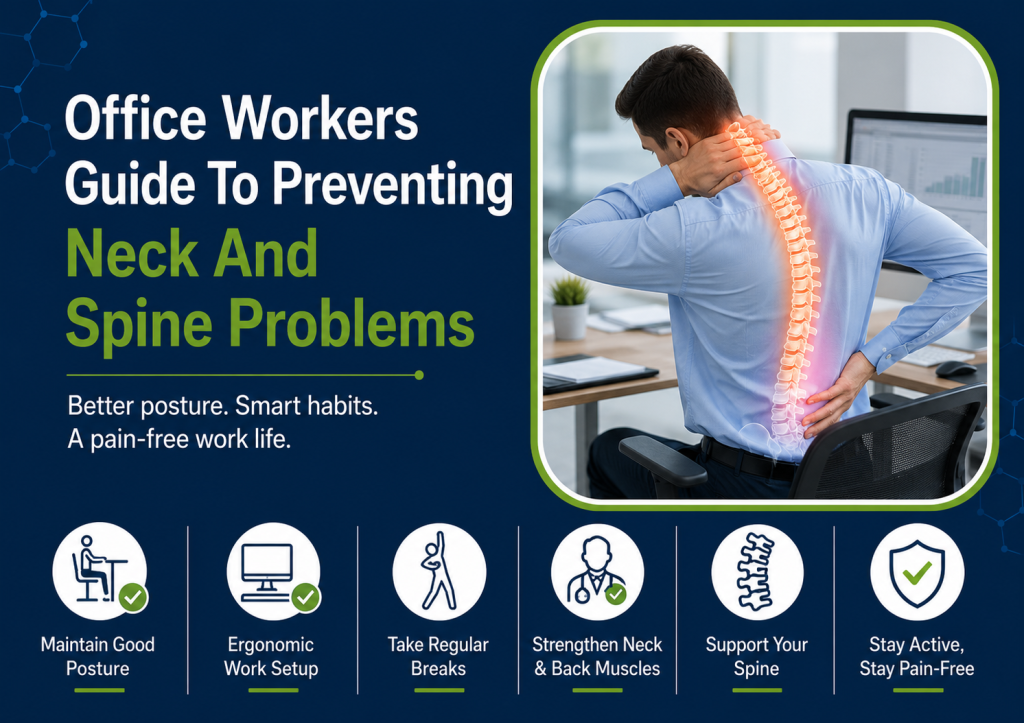
Modern office jobs require spending long hours sitting in front of computers. Unfortunately, poor posture, inadequate workstation ergonomics, and prolonged sitting have made neck pain and back pain increasingly common among working professionals.
Many patients visiting Dr. Tanay Prabhoo report neck stiffness, shoulder pain, and lower back discomfort caused by unhealthy workplace habits.
Why Office Workers Develop Spine Problems
The human spine is designed for movement-not prolonged sitting. Sitting continuously increases pressure on spinal discs and weakens the muscles supporting the spine.
Common causes include :
- Poor sitting posture
- Incorrect monitor height
- Lack of lumbar support
- Long hours without breaks
- Laptop use without ergonomic setup
- Mobile phone overuse ("tech neck")
- Physical inactivity
Symptoms You Should Not Ignore
Watch for these early warning signs :
- Neck stiffness
- Shoulder pain
- Lower back pain
- Frequent headaches
- Tingling in the hands
- Pain while sitting for long periods
- Reduced flexibility
- Muscle fatigue
Ergonomic Tips for a Healthy Spine
Maintain Proper Sitting Posture
- Keep your back straight.
- Relax your shoulders.
- Keep feet flat on the floor.
- Position your knees at approximately 90 degrees.
Adjust Your Computer Screen
- Screen at eye level
- About an arm's length away
- Avoid looking downward for long periods
Choose the Right Chair
Use an ergonomic chair with :
- Lumbar support
- Adjustable height
- Comfortable armrests
- Proper back support
Follow the 30–30 Rule
Every 30 minutes :
- Stand up
- Walk for 2–3 minutes
- Stretch your neck
- Stretch your shoulders
- Move your lower back
Regular movement helps reduce stiffness and improves circulation.
Simple Workplace Exercises
- Neck rotations
- Shoulder rolls
- Chest stretches
- Seated spinal twists
- Hamstring stretches
- Standing back extensions
These exercises help reduce muscle tension and improve flexibility.
Lifestyle Habits That Protect Your Spine
- Exercise regularly
- Maintain a healthy weight
- Sleep on a supportive mattress
- Stay hydrated
- Avoid smoking
- Manage stress
- Strengthen your core muscles
When Should You Consult a Spine Specialist?
Seek medical advice if you experience :
- Neck pain lasting more than two weeks
- Pain radiating into the arms
- Numbness or tingling
- Severe headaches associated with neck pain
- Persistent lower back pain
- Difficulty performing daily activities
Early diagnosis often prevents minor issues from becoming chronic spine disorders.
Conclusion
Good workplace ergonomics and healthy lifestyle habits can significantly reduce the risk of neck and spine problems. Small daily changes-such as maintaining proper posture, taking regular movement breaks, and exercising-can protect your spine and improve your overall well-being.
If neck or back pain persists despite these measures, consult Dr. Tanay Prabhoo in Andheri East for expert evaluation and personalized treatment. Early intervention can help you stay active, pain-free, and productive.

Dr. Tanay Prabhoo
Inspired by a passion to improve lives through advanced orthopedic care, Dr. Tanay Prabhoo embarked on his medical journey over a decade ago. As a skilled Orthopedic and Spine Surgeon, he has committed himself to treating musculoskeletal and spinal conditions, offering his patients innovative, tailored treatment plans.