
Frozen Shoulder & Osteoporosis: Early Diagnosis and Expert Care Tips
- Home
- Blogs
- Frozen Shoulder & Osteoporosis: Early Diagnosis and Expert Care Tips
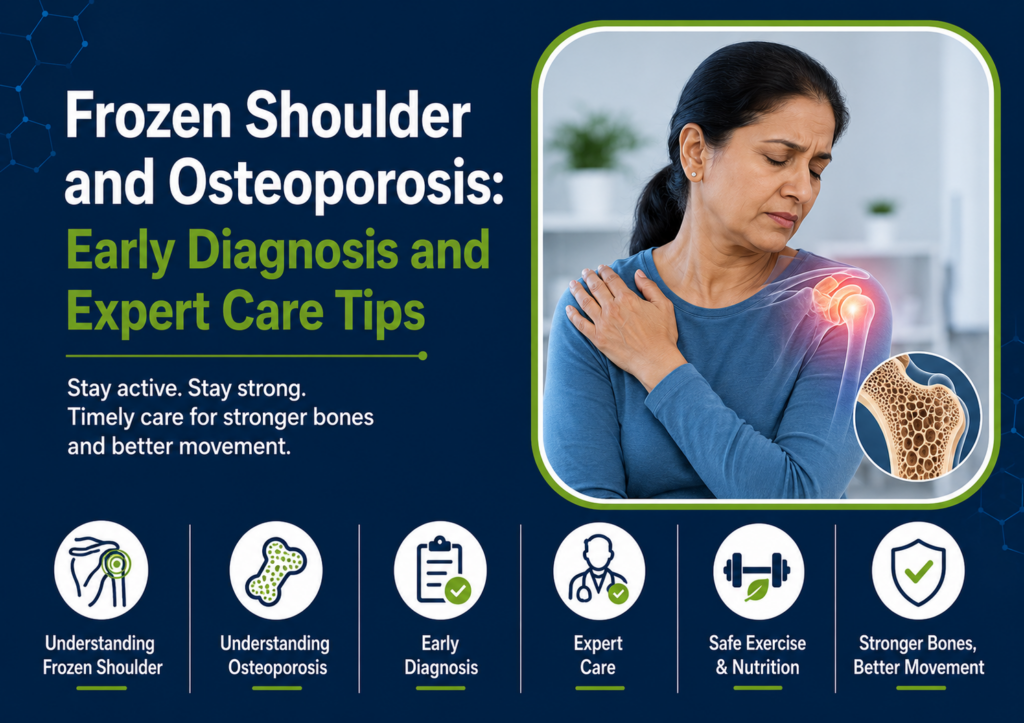
Frozen shoulder and osteoporosis are two common orthopedic conditions that can significantly affect movement, comfort, and quality of life. While frozen shoulder mainly causes stiffness and pain in the shoulder joint, osteoporosis weakens bones and increases the risk of fractures. Both conditions can progress silently if ignored, making early diagnosis and expert care extremely important.
For patients in Andheri East, Dr. Tanay Prabhoo provides evaluation and treatment guidance for shoulder stiffness, bone weakness, spine-related pain, fractures, and other orthopedic conditions.
Understanding Frozen Shoulder
Frozen shoulder, medically known as adhesive capsulitis, is a condition in which the shoulder joint becomes painful and stiff. It occurs when the capsule surrounding the shoulder joint becomes thick, tight, and inflamed, limiting movement.
Frozen shoulder usually develops gradually and may progress through stages. It can make simple activities such as combing hair, wearing clothes, reaching overhead, or sleeping on the affected side difficult.
Common Causes and Risk Factors of Frozen Shoulder
Frozen shoulder may develop without a clear cause, but certain factors increase the risk.
Common risk factors include :
- Diabetes
- Thyroid disorders
- Shoulder injury
- Prolonged shoulder immobilization
- Previous surgery
- Age between 40 and 60 years
- Sedentary lifestyle
- Poor posture
- Cervical spine-related pain or stiffness
People who avoid shoulder movement due to pain or injury are more likely to develop stiffness over time.
Symptoms of Frozen Shoulder
Frozen shoulder symptoms usually develop slowly and may include :
- Shoulder pain
- Stiffness in the shoulder joint
- Difficulty lifting the arm
- Pain while reaching behind the back
- Reduced range of motion
- Pain that worsens at night
- Difficulty dressing or combing hair
- Weakness due to reduced movement
Early diagnosis can help prevent severe stiffness and long-term restriction.
Stages of Frozen Shoulder
Frozen shoulder often progresses through three stages :
1. Freezing Stage
Pain gradually increases, and shoulder movement becomes limited. This stage may last several weeks to months.
2. Frozen Stage
Pain may reduce slightly, but stiffness becomes more prominent. Daily activities become difficult due to restricted movement.
3. Thawing Stage
Shoulder movement slowly improves with proper treatment and rehabilitation.
Treatment at the right stage can help reduce pain and improve recovery.
Understanding Osteoporosis
Osteoporosis is a condition in which bones become weak, porous, and more likely to fracture. It is often called a silent disease because bone loss can occur without obvious symptoms until a fracture happens.
Osteoporosis commonly affects the spine, hips, wrists, and shoulders. In spine-related osteoporosis, compression fractures can cause back pain, height loss, and posture changes.
Causes and Risk Factors of Osteoporosis
Several factors can increase the risk of osteoporosis, including :
- Aging
- Low calcium intake
- Vitamin D deficiency
- Lack of physical activity
- Hormonal changes
- Family history
- Long-term steroid use
- Smoking or tobacco use
- Excess alcohol intake
- Low body weight
- Early menopause
- Certain medical conditions
In urban lifestyles, reduced sunlight exposure, desk jobs, poor diet, and lack of exercise can contribute to poor bone health.
Symptoms of Osteoporosis
Osteoporosis may not cause symptoms in the early stages. However, signs may appear when bones become significantly weak.
Possible symptoms include :
- Back pain
- Loss of height over time
- Stooped posture
- Fractures after minor falls
- Wrist, hip, or spine fractures
- Sudden pain after bending or lifting
- Reduced mobility after fracture
Early screening is important, especially for people with risk factors.
Why Early Diagnosis Matters
Both frozen shoulder and osteoporosis can worsen if not treated early. Delayed treatment may lead to chronic pain, reduced movement, fractures, and long-term disability.
Early diagnosis helps in :
- Identifying the exact cause of pain or stiffness
- Starting treatment before complications develop
- Preventing severe joint restriction
- Reducing fracture risk
- Improving mobility and function
- Planning personalized care
Timely consultation with Dr. Tanay Prabhoo can help patients receive the right diagnosis and treatment approach.
How Frozen Shoulder Is Diagnosed
Diagnosis usually involves :
- Medical history review
- Shoulder movement examination
- Pain and stiffness assessment
- X-ray to rule out arthritis or injury
- MRI or ultrasound if soft tissue damage is suspected
- Evaluation for diabetes, thyroid issues, or cervical spine involvement when needed
A proper diagnosis helps differentiate frozen shoulder from rotator cuff injury, arthritis, nerve compression, or cervical spine-related pain.
How Osteoporosis Is Diagnosed
Osteoporosis diagnosis may include :
- Bone mineral density test
- X-rays if fracture is suspected
- Blood tests for calcium and Vitamin D levels
- Medical history and risk assessment
- Spine evaluation if back pain or height loss is present
Bone health screening is especially important for older adults, post-menopausal women, and people with repeated fractures.
Expert Care Tips for Frozen Shoulder
1. Do Not Ignore Early Shoulder Stiffness
Mild stiffness can progress if shoulder movement is avoided. Early treatment can prevent worsening.
2. Start Guided Physiotherapy
Physiotherapy is a key part of frozen shoulder care. It helps restore flexibility, reduce stiffness, and improve shoulder movement.
Exercises may include :
- Gentle stretching
- Range-of-motion exercises
- Shoulder mobility drills
- Strengthening exercises
- Posture correction
Exercises should be done under guidance to avoid worsening pain.
3. Manage Pain and Inflammation
Pain control may include medicines, heat therapy, cold therapy, or injection-based treatments when required. Reducing pain helps patients participate better in rehabilitation.
4. Correct Posture and Neck Mechanics
Poor posture and cervical spine stiffness can affect shoulder movement. Correcting posture and improving neck mobility may support recovery.
5. Follow Treatment Consistently
Frozen shoulder recovery takes time. Regular exercises, follow-up care, and patience are important for long-term improvement.
Expert Care Tips for Osteoporosis
1. Check Bone Health Early
People with risk factors should consider bone health screening before fractures occur.
2. Improve Calcium and Vitamin D Intake
A balanced diet with adequate calcium and Vitamin D supports bone strength. Sunlight exposure and supplements may be advised based on medical evaluation.
3. Perform Weight-Bearing Exercises
Walking, strength training, and balance exercises can help improve bone strength and reduce fall risk.
4. Prevent Falls
Fall prevention is critical for osteoporosis patients.
Helpful steps include: :
- Wearing proper footwear
- Improving home lighting
- Removing slippery rugs
- Using handrails
- Avoiding wet floors
- Improving balance and muscle strength
5. Take Medication When Recommended
Some patients may need medications to improve bone density and reduce fracture risk. These should be taken only under medical supervision.
Connection Between Osteoporosis and Spine Health
Osteoporosis commonly affects the spine and may lead to vertebral compression fractures. These fractures can cause sudden back pain, height loss, spinal deformity, and reduced mobility.
Warning signs of spine-related osteoporosis include :
- Sudden back pain after minor strain
- Loss of height
- Stooped posture
- Pain while standing or walking
- Repeated fractures
A spine specialist can evaluate whether back pain is related to osteoporosis, disc problems, arthritis, or nerve compression.
When Should You Consult an Orthopedic Specialist?
You should seek medical advice if you experience :
- Shoulder pain lasting more than a few weeks
- Difficulty lifting or rotating the arm
- Night pain in the shoulder
- Sudden back pain
- Loss of height
- Fracture after a minor fall
- Repeated joint stiffness
- Difficulty performing daily activities
- Pain not improving with rest
Early consultation with Dr. Tanay Prabhoo can help diagnose the problem accurately and start the right treatment.
Frozen Shoulder & Osteoporosis Care in Andheri East, Mumbai
Patients in Andheri East can benefit from specialized orthopedic and spine care for shoulder stiffness, bone weakness, fractures, back pain, and mobility issues. A personalized approach helps manage pain, restore movement, strengthen bones, and prevent complications.
Final Thoughts
Frozen shoulder and osteoporosis are common but manageable orthopedic conditions. Early diagnosis, proper medical care, physiotherapy, bone health screening, lifestyle changes, and expert guidance can help prevent long-term problems.
If you are experiencing shoulder stiffness, persistent pain, back pain, or signs of bone weakness, consulting an orthopedic spine specialist can help you receive timely care and improve your mobility, strength, and quality of life.