
Modern Fracture Treatment Techniques for Faster Recovery
- Home
- Blogs
- Modern Fracture Treatment Techniques for Faster Recovery
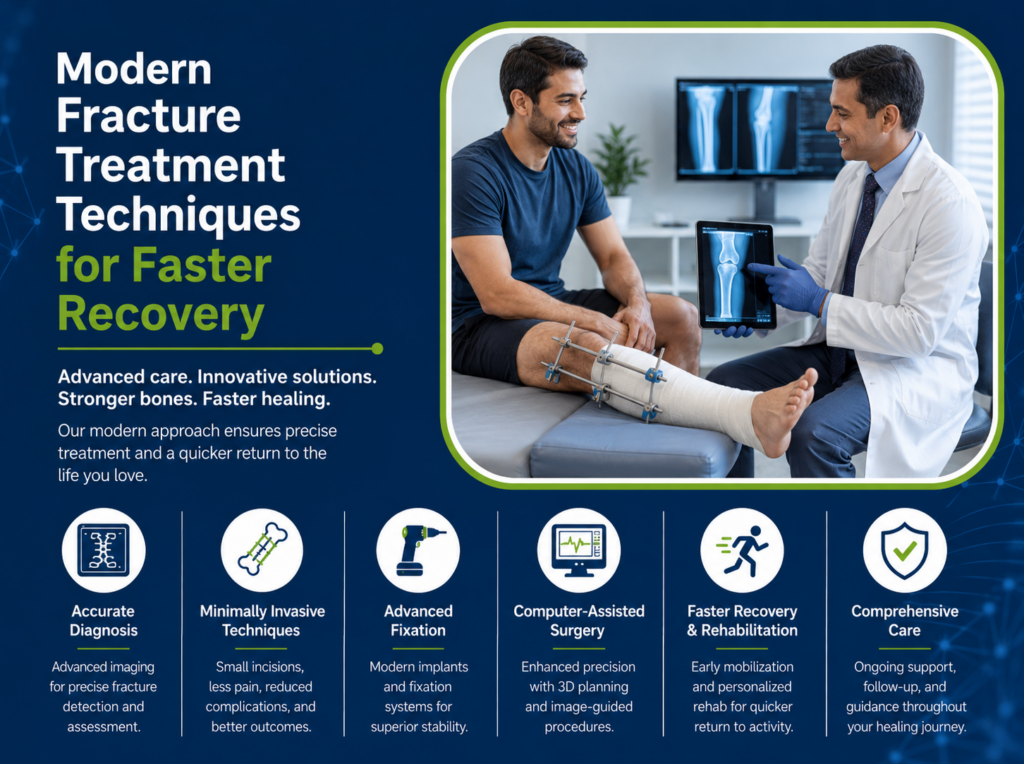
Fractures are among the most common orthopedic injuries and can happen due to falls, accidents, sports injuries, workplace incidents, or age-related bone weakness. A fracture is not just a broken bone; it can also affect nearby muscles, ligaments, nerves, blood vessels, and joints. Proper diagnosis and timely treatment are essential for safe healing and faster recovery.
For patients seeking expert orthopedic care in Andheri East, Dr. Tanay Prabhoo offers patient-focused evaluation and treatment for bone, joint, and spine-related conditions.
Understanding Fractures
A fracture occurs when a bone breaks partially or completely due to force, stress, or weakness. The severity of a fracture depends on the location, type of break, patient age, bone quality, and associated soft tissue injury.
Common types of fractures include :
- Simple fracture : The bone breaks but does not pierce the skin
- Compound fracture : The broken bone comes through the skin
- Hairline fracture : A small crack in the bone
- Comminuted fracture : The bone breaks into multiple pieces
- Stress fracture : A small crack caused by repetitive pressure
- Greenstick fracture : A partial fracture, commonly seen in children
- Pathological fracture : A fracture caused by weakened bone due to disease
Early medical evaluation helps determine the right treatment and reduces the risk of complications.
Common Causes of Fractures
Fractures may occur due to several reasons, including :
- Road traffic accidents
- Falls at home or workplace
- Sports injuries
- Heavy impact or trauma
- Osteoporosis or weak bones
- Repetitive strain
- Sudden twisting injuries
- Industrial or occupational injuries
In busy urban areas like Andheri East, road accidents, falls, and workplace injuries are common causes of orthopedic trauma.
Symptoms That May Indicate a Fracture
You should seek medical attention if you notice :
- Severe pain after injury
- Swelling or bruising
- Difficulty moving the affected area
- Visible deformity
- Inability to bear weight
- Tenderness around the injury
- Numbness or tingling
- Bleeding in case of open injury
Ignoring fracture symptoms can delay healing and increase the risk of long-term problems.
Importance of Accurate Diagnosis
Modern fracture care begins with accurate diagnosis. A specialist may recommend physical examination and imaging tests such as X-rays, CT scans, or MRI depending on the injury.
Accurate diagnosis helps determine :
- Type and location of fracture
- Bone alignment
- Joint involvement
- Soft tissue damage
- Need for surgical or non-surgical treatment
- Expected recovery timeline
A correct treatment plan ensures better healing and reduces complications.
Modern Fracture Treatment Techniques
Advancements in orthopedic care have improved fracture treatment significantly. Modern techniques focus on restoring bone alignment, preserving joint movement, reducing pain, and helping patients return to normal activities faster.
1. Advanced Casting and Splinting
For stable fractures, non-surgical treatment with casts or splints may be sufficient. Modern casting materials are lighter, more comfortable, and provide better support compared to traditional plaster casts.
Benefits include :
- Immobilization of the injured bone
- Pain reduction
- Protection during healing
- Improved comfort
- Suitable for many simple fractures
Splints may be used initially when swelling is present, while casts may be applied once swelling reduces.
2. Functional Bracing
Functional bracing allows controlled movement while still supporting the fractured bone. It is commonly used in selected fractures where early mobility can support recovery.
Advantages include :
- Better comfort
- Reduced stiffness
- Maintained muscle activity
- Improved rehabilitation outcomes
This technique is chosen based on fracture type and stability.
3. Minimally Invasive Fracture Surgery
Minimally invasive techniques use smaller incisions to align and stabilize broken bones. These methods reduce soft tissue damage and may help patients recover faster.
Benefits may include :
- Smaller surgical wounds
- Less pain after surgery
- Reduced blood loss
- Lower infection risk
- Faster rehabilitation
- Shorter hospital stay
Minimally invasive procedures are often used for selected fractures of the limbs, joints, and complex trauma cases.
4. Internal Fixation with Plates, Screws, or Nails
Internal fixation is a surgical method where implants such as plates, screws, rods, or nails are used to hold broken bones in proper alignment.
This technique is commonly used for :
- Unstable fractures
- Displaced fractures
- Fractures involving joints
- Multiple bone fragments
- Long bone fractures
- Fractures that cannot heal properly with casting alone
Internal fixation helps maintain alignment and allows early movement in many cases.
5. External Fixation for Complex Injuries
External fixation involves placing pins or screws into the bone and connecting them to a frame outside the body. This technique is often used for severe fractures, open fractures, or injuries with significant soft tissue damage.
It helps in :
- Stabilizing complex fractures
- Managing open injuries
- Protecting damaged soft tissues
- Temporary or definitive fracture care
- Treating fractures with infection risk
External fixation can be an important option in trauma management.
6. Computer-Assisted and Image-Guided Techniques
Modern orthopedic surgery may use advanced imaging guidance to improve precision during fracture fixation. This helps surgeons place implants accurately and reduce complications.
Benefits include :
- Improved surgical accuracy
- Better fracture alignment
- Reduced risk of implant misplacement
- Enhanced treatment planning
Such techniques are especially useful in complex fractures and joint-related injuries.
7. Bone Grafting and Biological Support
In some cases, fractures may need additional biological support to heal properly. Bone grafting may be used when there is bone loss, delayed healing, or complex fracture patterns.
Bone grafting can help :
- Stimulate bone healing
- Fill bone gaps
- Support reconstruction
- Improve stability
The decision depends on the patient’s condition and fracture complexity.
Role of Rehabilitation in Faster Recovery
Fracture treatment does not end after casting or surgery. Rehabilitation is essential for restoring strength, flexibility, and function.
A rehabilitation program may include :
- Gentle range-of-motion exercises
- Muscle strengthening
- Weight-bearing progression
- Balance training
- Joint mobility exercises
- Gait training
- Pain and swelling management
Following a structured rehabilitation plan helps prevent stiffness and supports safe recovery.
Factors That Affect Fracture Healing
Healing time varies from person to person. Several factors can influence recovery, including :
- Age
- Bone quality
- Type and location of fracture
- Severity of injury
- Nutrition
- Diabetes or other medical conditions
- Smoking or tobacco use
- Compliance with treatment
- Physiotherapy participation
Patients should follow medical advice carefully to support proper healing.
Tips for Faster Fracture Recovery
To support healing and reduce complications :
- Follow the treatment plan strictly
- Avoid putting weight on the injured area unless advised
- Keep follow-up appointments
- Eat a balanced diet rich in protein, calcium, and Vitamin D
- Avoid smoking and tobacco
- Do prescribed exercises regularly
- Report increasing pain, swelling, numbness, or fever
- Do not remove casts or supports without medical advice
When Should You Consult an Orthopedic Specialist?
You should consult an orthopedic specialist immediately if you have :
- Severe pain after injury
- Visible deformity
- Inability to move or bear weight
- Open wound with suspected bone injury
- Numbness or weakness
- Swelling that keeps increasing
- Pain that does not improve
- Suspected fracture after fall or accident
Timely care by Dr. Tanay Prabhoo can help ensure proper diagnosis, effective treatment, and safe recovery.
Modern Fracture Treatment in Andheri East, Mumbai
Patients in Andheri East can benefit from advanced orthopedic evaluation and treatment for fractures, injuries, joint pain, and spine-related concerns. Modern fracture care focuses not only on bone healing but also on restoring function, mobility, and confidence.
Final Thoughts
Modern fracture treatment techniques have made recovery safer, faster, and more effective. From advanced casting and functional bracing to minimally invasive surgery, internal fixation, external fixation, and rehabilitation, treatment is now highly personalized based on the patient’s needs.
If you experience pain, swelling, deformity, or difficulty moving after an injury, do not delay medical care. Early diagnosis and expert treatment can make a major difference in healing, mobility, and long-term orthopedic health.